
Introduction
When discussing sanitary infrastructure, most people focus on visible fixtures such as wash basins, toilet seats, kitchen sinks, and bathroom vanities. However, one critical component that often goes unnoticed is the manhole cover. Despite being hidden in plain sight, manhole covers play a vital role in protecting underground drainage systems, sewer networks, water pipelines, and utility access points.
For decades, traditional cast iron and concrete manhole covers dominated the market. While these materials served their purpose, modern infrastructure projects and property owners are increasingly shifting toward FRP (Fiber Reinforced Plastic) manhole covers.
This shift is not simply a trend. FRP manhole covers offer several advantages over traditional alternatives, including durability, corrosion resistance, safety, and lower maintenance requirements.
If you’re planning a residential, commercial, industrial, or municipal project, understanding the differences between FRP and traditional manhole covers can help you make a smarter long-term investment.
This comprehensive guide explores the features, benefits, drawbacks, and applications of both options to help you determine which solution best suits your needs.
What Is a Manhole Cover?
A manhole cover is a removable lid placed over an underground access point.
Its primary functions include:
- Protecting underground utility systems
- Preventing accidents
- Restricting unauthorized access
- Supporting pedestrian and vehicle traffic
- Allowing maintenance access when needed
Manhole covers are commonly found in:
- Residential properties
- Commercial complexes
- Roads and highways
- Industrial facilities
- Parks and gardens
- Municipal drainage systems
Because they are constantly exposed to weather conditions and external loads, durability is extremely important.
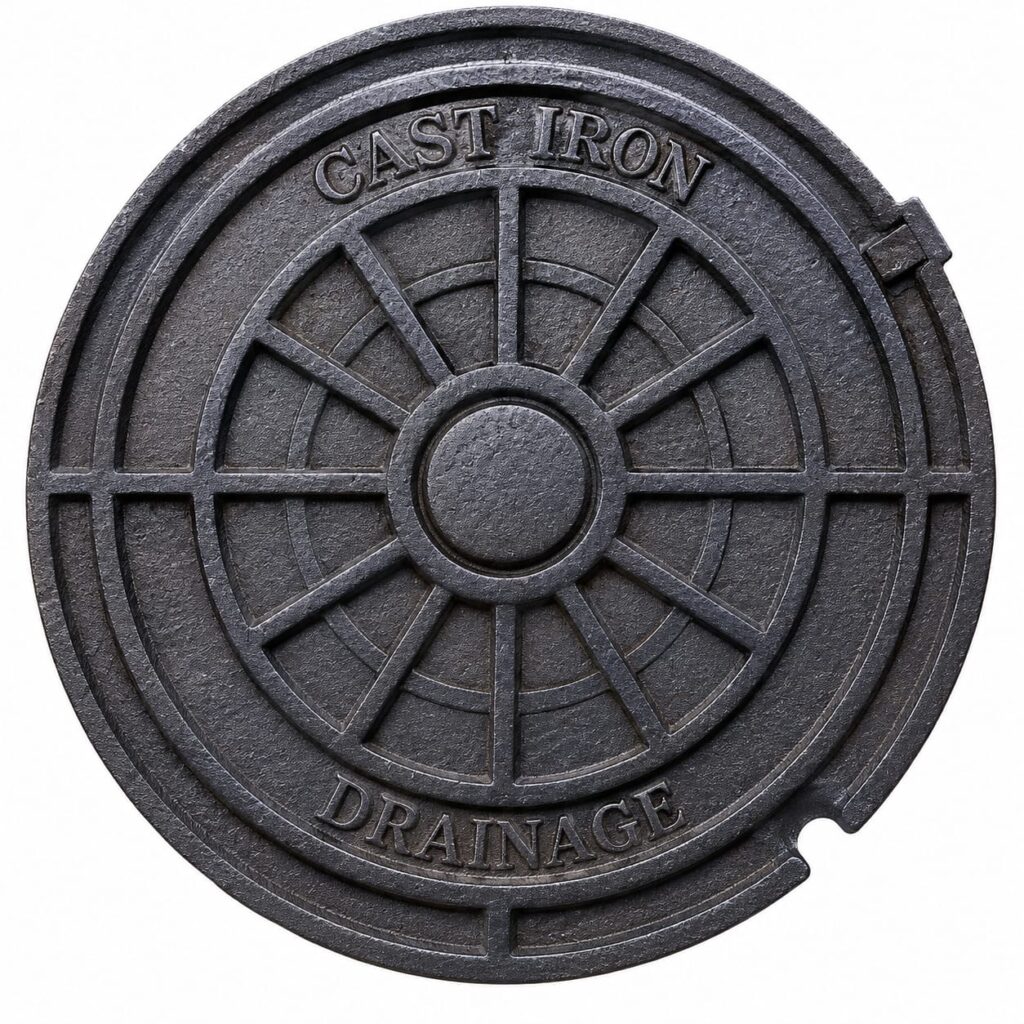
Understanding Traditional Manhole Covers
Traditional manhole covers are typically made from:
Cast Iron
The most commonly used traditional material.
Ductile Iron
A stronger variation of cast iron.
Reinforced Concrete
Used in many residential and municipal applications.
These materials have been used for decades due to their strength and load-bearing capabilities.
What Are FRP Manhole Covers?
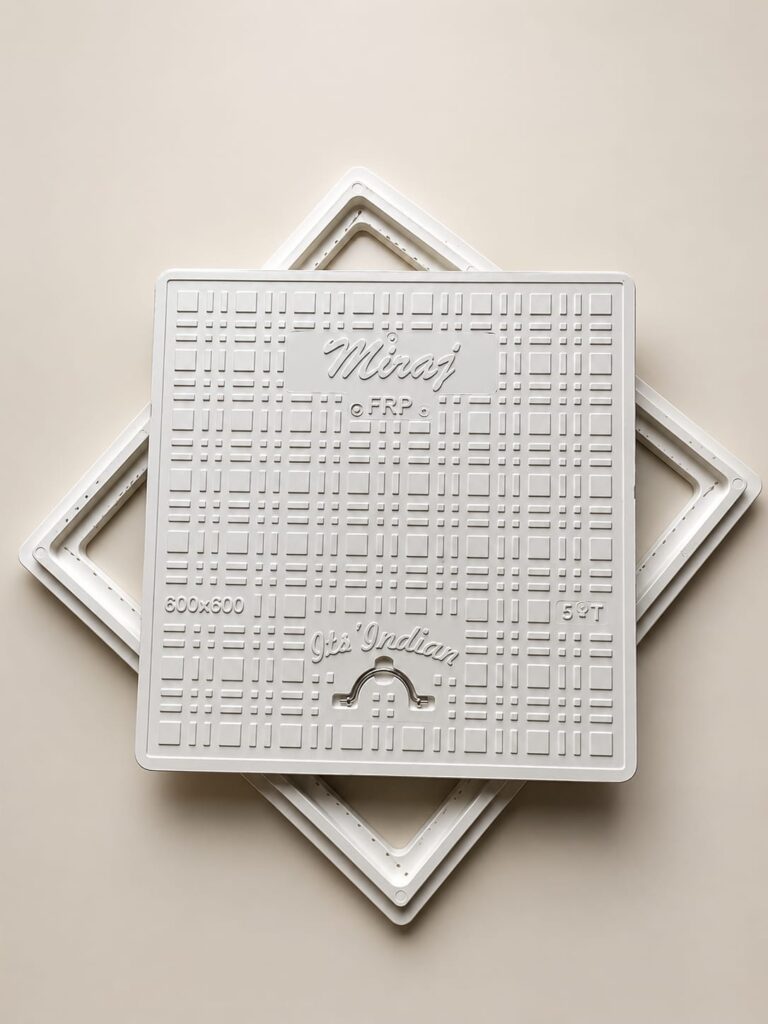
FRP stands for Fiber Reinforced Plastic.
FRP manhole covers are manufactured using a combination of:
- High-strength fibers
- Polymer resins
- Reinforcement materials
This combination creates a lightweight yet extremely durable product capable of withstanding substantial loads and environmental conditions.
Over the past decade, FRP technology has gained popularity worldwide due to its superior performance characteristics.
Why Are FRP Manhole Covers Becoming Popular?
Several factors have contributed to the rapid growth of FRP manhole covers.
These include:
- Urban infrastructure development
- Increased theft of metal covers
- Demand for corrosion-resistant materials
- Lower maintenance requirements
- Improved safety standards
- Need for lightweight solutions
Today, FRP covers are commonly used in residential, commercial, industrial, and municipal projects.
FRP vs Traditional Covers: Detailed Comparison
To determine which option is better, let’s compare them across several important factors.
1. Weight Comparison
Traditional Covers
Cast iron and concrete covers are extremely heavy.
A typical cast iron cover may weigh several times more than an FRP equivalent.
FRP Covers
FRP covers are significantly lighter while maintaining excellent strength.
Advantage: FRP
The reduced weight offers:
- Easier transportation
- Faster installation
- Simplified maintenance access
- Reduced labor requirements
This is one of the biggest reasons many contractors prefer FRP products.
2. Corrosion Resistance
Traditional Covers
Metal covers are susceptible to:
- Rust
- Corrosion
- Chemical damage
- Moisture-related deterioration
Over time, these issues can weaken the structure.
FRP Covers
FRP materials are naturally resistant to:
- Water
- Chemicals
- Corrosion
- Salt exposure
Advantage: FRP
This makes them ideal for areas with high moisture levels or aggressive environmental conditions.
3. Durability and Strength
Traditional Covers
Cast iron covers offer excellent load-bearing strength.
However, corrosion and environmental exposure can gradually affect performance.
FRP Covers
Modern FRP covers are engineered to provide exceptional strength while remaining lightweight.
They are designed to withstand:
- Pedestrian traffic
- Residential vehicle loads
- Commercial applications
- Industrial environments
Advantage: Tie
Both options can be highly durable when manufactured to appropriate standards.
4. Theft Resistance
Traditional Covers
Metal theft has become a major issue worldwide.
Cast iron covers often have significant scrap value.
This makes them attractive targets for theft.
FRP Covers
FRP has little to no resale value as scrap material.
Advantage: FRP
Theft resistance is one of the most important benefits of FRP covers.
Stolen manhole covers create serious safety hazards and replacement costs.
5. Maintenance Requirements
Traditional Covers
Require periodic inspections for:
- Rust
- Corrosion
- Structural deterioration
Maintenance costs can increase over time.
FRP Covers
Require minimal maintenance.
They resist environmental damage and maintain their appearance longer.
Advantage: FRP
Lower maintenance translates into long-term cost savings.
6. Installation Process
Traditional Covers
Due to their weight, installation often requires:
- Multiple workers
- Specialized equipment
- Additional time
FRP Covers
Lightweight construction makes installation faster and easier.
Advantage: FRP
Reduced labor requirements can significantly lower project costs.
7. Safety Considerations
Traditional Covers
Heavy metal covers can pose handling risks during installation and maintenance.
FRP Covers
Their lighter weight improves worker safety.
Additional safety benefits include:
- Non-conductive properties
- Non-sparking characteristics
- Better handling
Advantage: FRP
Especially valuable in electrical and industrial environments.
8. Environmental Impact
Traditional Covers
Metal production requires substantial energy and resource consumption.
FRP Covers
Modern FRP manufacturing processes often result in lower overall environmental impact.
Their longer lifespan also reduces replacement frequency.
Advantage: FRP
An increasingly attractive option for sustainable construction projects.
9. Cost Comparison
Initial Cost
Traditional covers may sometimes appear less expensive initially depending on specifications.
However, purchase price alone does not provide the complete picture.
Long-Term Cost
Factors include:
- Maintenance
- Replacement
- Theft risk
- Labor costs
- Transportation
Advantage: FRP
In many cases, FRP covers provide better long-term value despite comparable or slightly higher initial costs.
Why Homeowners and Builders Are Switching to FRP
The growing popularity of FRP manhole covers is driven by practical advantages.
Key reasons include:
- Lightweight design
- Corrosion resistance
- Theft prevention
- Reduced maintenance
- Easier installation
- Long service life
- Improved safety
These benefits make FRP an attractive solution for modern construction projects
Conclusion
Choosing the right manhole cover is essential for ensuring safety, durability, and long-term performance. While traditional cast iron and concrete covers have served the industry for many years, modern FRP manhole covers offer significant advantages that make them an increasingly preferred solution.
Their lightweight construction, corrosion resistance, theft prevention, low maintenance requirements, and excellent durability provide substantial value for homeowners, builders, contractors, and municipal authorities alike.
Whether you’re working on a residential project, commercial development, or infrastructure installation, FRP manhole covers represent a modern, reliable, and cost-effective investment.
At Goyal Sanitary Wares, we offer high-quality FRP manhole covers designed to deliver superior performance, safety, and long-lasting durability. Explore our range to find the ideal solution for your project and experience the benefits of modern sanitary infrastructure.